


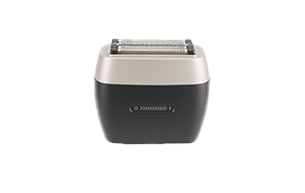


Trimmers rely heavily on blade geometry to fulfill different grooming tasks. The two dominant shapes in professional trimmers today are the U-blade and the T-blade. Although they may appear similar, their functions and advantages vary significantly.
The U-Blade: Controlled Everyday Trimming
U-blades follow a rounded, narrower shape. Their primary strengths include:
U-blades are ideal for moustache detailing, beard shaping, and general cleanup work. Their geometry makes it easier to navigate tight areas around the lip, chin, and neckline without overcutting or scratching sensitive skin.
T-blades extend beyond the width of the trimmer body, forming a horizontal “T” profile. This wider footprint provides:
For barbers, the T-blade is essential for creating crisp edges around the hairline, beard, and sideburns. Its extended tips make it easier to engage corners, curves, and edges without contorting the hand or repositioning the tool repeatedly.
T-blades are more frequently used in zero-gapped configurations due to their outlining purpose. Zero-gapping moves the cutting edge closer to the skin for sharper lines. However, this increases the need for steady hands and proper technique to avoid irritation. U-blades can also be zero-gapped but are less commonly configured this way due to their general-use nature.
For home users, a U-blade is typically more intuitive and safer for everyday trimming. For professional barbers, the T-blade is indispensable for precision edging, beard graphics, and detailed finishing work.
From a B2B perspective, both blades satisfy different market needs. Retailers benefit from stocking both blade types, while barbershops often purchase T-blades as a secondary tool in addition to general grooming trimmers.
No account yet?
Create an Account
